Everything You Need,
When You Need It.
The Profilm Resources hub centralises technical documentation, installation guidance, and practical knowledge. Designed to support installers, partners, and customers with clear, reliable information at every stage of the protection lifecycle.
Practical Insight, Not Marketing Noise
Deep-dive guidance for those who want to understand the why, not just the what.
Content is written to support decision-making, training, and confidence.
PPF Explained
Choosing the Right PPF
Choosing the Right Window Film
Finding the Right Installer
Warranty
Learn MorePaint Protection Film (PPF)
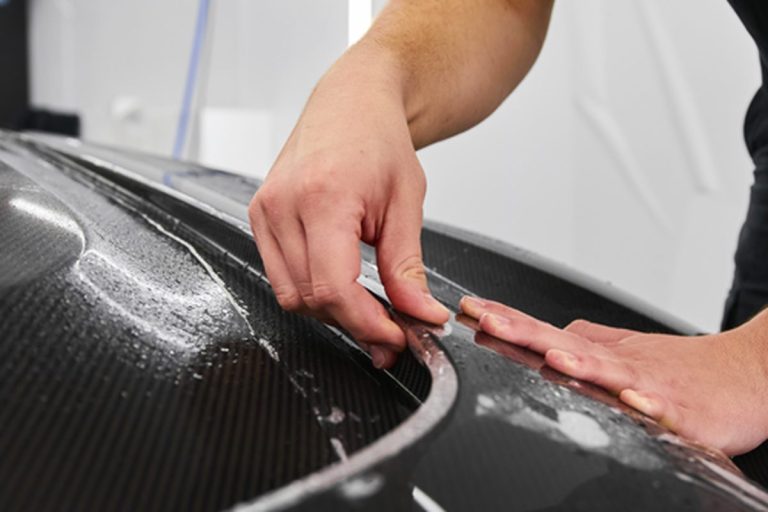
PPF Explained
Paint Protection Film (PPF) was originally developed for military aerospace applications, where it was used to protect rotor and fixed-wing aircraft blades from impact damage caused by airborne debris. The technology has since been adapted for automotive use, evolving significantly from its early purely functional iterations.
Modern automotive PPF is an optically clear, multilayer film that bonds to vehicle painted surfaces, providing a durable barrier against salt, sand, stone chips, and minor abrasions encountered in everyday driving conditions.
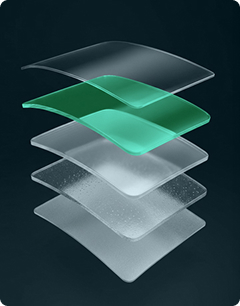
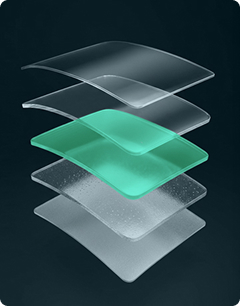
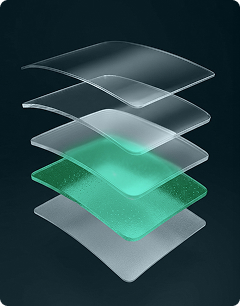
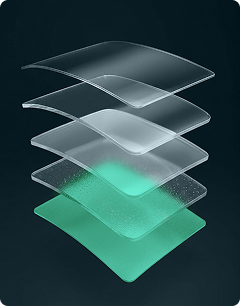
PPF is a multilayer composite engineered for flexibility and impact resistance. From outermost to innermost, the layers are as follows:
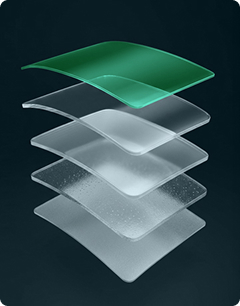
A layer of removable polyester or silicone film used to protect the topcoat during manufacture and transit, and helps minimise surface texture irregularities (commonly referred to as “orange peel”).
Protects the topcoat during transport & storage. Removed prior to installation. Not all PPFs come with a capsheet.
A flexible polyurethane layer that recovers either by instant self-healing or heat self-healing.
Typically 10-15 µm in thickness
The primary structural layer: The grade used for PPF should be elastic, optically clear, and UV-resistant.
Typically 150µm
Balanced tack formulation designed for secure bonding and repositionability during installation.
Typically 25-35 µm
Removed prior to installation
Typically 75 µm and removed prior to installation.
Self-healing performance varies by formulation. Softer topcoats offer greater elasticity and recover more effectively from surface deformation caused by stone chips or road debris. This instant-healing advantage can mean a shorter performance and aesthetics lifespan as minute particles of dirt and dust get trapped and might in time make the film appear “dirty”.
Harder topcoats often need a heat source to accelerate its self-healing properties. They can feel more rigid but offer improved resistance to day-to-day abrasion, resulting in better long-term aesthetic durability.
Film quality is directly influenced by TPU type and grade. At the same time, a thicker PPF does not equate to more protection. A premium, chemically balanced 150µm TPU can outperform a low-grade 250µm TPU.
Performance depends on formulation, chemistry, and how the material is processed and tested. One of the most important distinctions is between aromatic and aliphatic TPU. Aromatic variants are reactive to UV radiation: they yellow, embrittle, and degrade over time. Aliphatic TPU is UV-stable, crystal clear, and engineered specifically for long-term optical and structural performance. Two films can both be labelled “TPU-based” and perform very differently over five or ten years.
The same chemistry explains edge lift.
Rigid or poorly balanced TPU retains internal stress when stretched over complex geometry. Over time, that tension fights the adhesive. Premium aliphatic TPU relaxes naturally, conforming like a second skin and maintaining a clean, zero-tension bond at the edges.

Profilm’s Ultra Clear Pro (12-year warranty) and Lucent (10-year warranty) are built on Lubrizol aliphatic ESTANE® TPU.
Across the wider range, Profilm uses carefully selected TPU systems expected to meet the company’s standards for installation, finish quality, and durability in service.
As a premium Lubrizol partner, and a proud recipient of the Lubrizol Premium PPF Guardian Award, Profilm makes that material choice visible.
The adhesive layer must balance high initial tack with sufficient open time to allow repositioning without leaving marks during installation. As digitally-cut patterns become increasingly precise, the market is shifting toward faster-curing adhesive formulations to improve installation efficiency.
Installation should only be performed by a trained and experienced professional. If uncertain, contact us for an authorised installer recommendation.
Film Variants
Gloss PPF for near-invisible protection and high optical clarity.
Matte and satin PPF for factory matte finishes or satin visual effects.
Gloss black, matte black, carbon, and smoke films for accents, trim, headlights, and selected design details.
Colour-change PPF for customers who want a visual change while retaining protective properties.
Specialist applications such as panoramic roof protection or interior trim protection where product documentation confirms suitability.
Professional installation
PPF should be installed by a trained and experienced professional. Correct surface preparation, pattern selection, stretch control, edge finishing, curing conditions, and handover documentation all affect the final result and the customer experience.
Paint Protection Film (PPF)
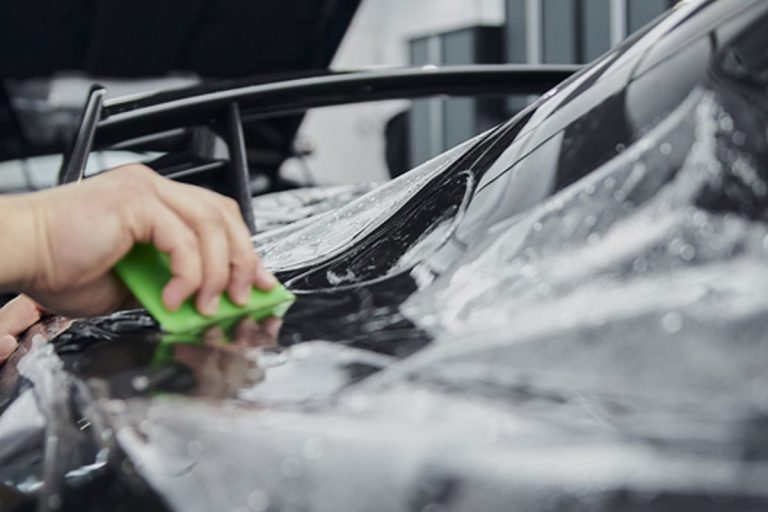
Choosing the Right PPF
As the PPF market continues to expand, so does the range of products available to installers and consumers. Selecting the right film for a given application is a critical decision; one that directly impacts installation efficiency, end-result quality, and customer satisfaction. This guide outlines the key criteria installers should evaluate when specifying a PPF product.
1. Finish Options
The first decision is visual. The film should either preserve the vehicle's original appearance or intentionally change it in a controlled way.
Select a finish above to explore its use cases
Gloss PPF should prioritise optical clarity, gloss, surface uniformity, and an invisible-looking installation.
Matte PPF should reproduce a consistent, non-directional matte or satin finish and avoid a patchy or uneven effect across panels.
Colour-change PPF can create a stronger visual change whilst retaining protective properties.
Accent films such as carbon, gloss black, matte black, smoke, and headlight films can extend customisation options for mirrors, trim, headlights, B-pillars, and other selected areas.
2. Evaluate Material Quality
In a market where product quality and service levels vary considerably, brand reputation can be a reliable indicator of film consistency and long-term performance. When evaluating a supplier, consider the following:
Is the brand a genuine manufacturer? Is the film produced under controlled, consistent conditions? Does the brand own the factory? The IWFA Manufacturer Certification is a good starting point to verify this.

Does the brand have established links with automotive manufacturers? OEMs often require very high standards in the process and output. Look out for IATF16949 certification.
Does the manufacturer provide accessible technical support, installation guidance, and training resources? Are the technicians knowledgeable and responsive?
Has the manufacturer developed their own user-friendly and reliable software, or are they relying on an “off-the-shelf” generic solution?
Is your supplier easy to do business with, and do they listen to you? Do they go out of their way to help you grow?
A manufacturer-backed warranty is an important assurance for both the installer and the end consumer. Review the warranty terms carefully: what is covered, for how long, and under what conditions? A comprehensive warranty reflects the manufacturer’s confidence in their product and provides the installer with a strong sales tool when quoting customers.
3. Choosing an Installer-friendly Film
In a market where product quality and service levels vary considerably, brand reputation can be a reliable indicator of film consistency and long-term performance. When evaluating a supplier, consider the following:
ADHESIVE PERFORMANCE
The adhesive must offer high initial tack for a secure bond whilst retaining sufficient open time to allow repositioning. As digitally-cut patterns become more precise, faster-curing adhesives are increasingly preferred, reducing installation time without compromising reliability.
FILM FLEXIBILITY
A film’s ability to conform to complex curves, tight radii, and recessed panel edges is largely determined by the elasticity, structure and thickness of the TPU layer.
PATTERN AVAILABILITY
The quality and coverage of a manufacturer’s pattern library is a practical consideration that directly affects installation speed and accuracy. A comprehensive, regularly updated pattern database improves efficiencies and minimises material waste.
CONSISTENCY
Batch-to-batch consistency in film thickness, adhesive performance, and optical quality is essential for maintaining installation standards across different jobs and over time. Only a true manufacturer can offer this guarantee.
4. Review supplier credibility and support
The supplier behind the film matters. A strong PPF partner should provide smooth and fast material supply, technical support, product documentation, warranty clarity, training, and practical installer support.
-
Is the brand a genuine manufacturer or closely connected to manufacturing control?
-
Are technical data sheets and warranty documents easy to access?
-
Can the supplier answer installation questions quickly and accurately?
-
Does the supplier provide training, software, patterns, and business support?
-
Does the supplier listen to installer feedback and improve products or support processes over time?
Choosing the right supplier is a reflection of your professionalism and commitment to quality.
Talk to Profilm about your PPF needsAutomotive Window Film
Choosing the Right Window Film
Window film is one of the most effective upgrades you can make to your vehicle or home glazing, but with so many options available, knowing where to start can feel overwhelming. Here’s what you need to know.
Why factory-tinted glass is not the full answer
Factory privacy glass can reduce glare and increase privacy but it does not necessarily provide strong heat rejection or comprehensive UV protection.
UVA radiation passes straight through most untreated glass and the cumulative long-term exposure increases the risk of skin-related health problems. UV exposure inside a vehicle can also cause dashboards, upholstery, and trim to fade and crack.
A quality window film blocks up to 99% of UV rays, providing meaningful protection that factory tinting simply cannot. Some specialty films will block a wider range of the solar spectrum, offering near 100% protection to passengers inside the vehicle.
1. Key performance measures
Window film should be selected using measurable criteria, not shade alone:
Typically measured at 280-380nm of the solar spectrum, this datapoint indicates the level of ultraviolet protection provided by the film.
Total Solar Energy Rejected. A higher TSER generally means stronger overall heat rejection, and greater comfort inside the vehicle.
Infrared rejection is sometimes used as a headline number, but only tells part of the heat rejection story, as it covers a narrower wavelength of the solar spectrum, namely the near infrared (NIR). Always check the TSER alongside IRR.
Visible Light Transmittance. This shows how much visible light passes through the film. A higher VLT means a lighter, more transparent appearance. A lower VLT means a darker appearance, and less light filtering through the window.
Indicates how much visible glare is reduced. This improves comfort in bright conditions, especially when using modern screens and dashboards.
2. Main film technologies
Dyed films
Dyed films are typically more affordable and provide glare reduction and privacy, with more modest heat rejection.
Metallised films
Metallised films use a thin metal layer to reflect heat more effectively, although compatibility with some signals and devices should be considered.
Ceramic films
Ceramic films use advanced ceramic technology to provide strong heat rejection, UV protection, and clarity without metal content.
Multilayer or magnetron films
Multilayer or magnetron films are engineered for higher performance across selected solar-control metrics, depending on product design.
3. Understanding VLT and appearance
VLT, or Visible Light Transmittance, is the percentage of visible light that passes through the glass and film. A 70% VLT film is relatively clear. A 5% VLT film is very dark, often called “limo black”. Choosing VLT is therefore both a performance decision and an appearance decision.
The final appearance also depends on the original glass. A film applied over factory privacy glass will look darker than the same film applied over clear glass.
Legal Limits
Visible light transmission limits vary by region and by window position. Front side windows, rear side windows, rear screens, and windscreens may be treated differently by local law. Always check local regulations before selecting a film shade. A professional installer will be able to advise on compliant options.
4. Choosing by use case
Prioritise TSER and product documentation, not just darkness.
Consider VLT and the existing glass colour.
Check the UV rejection value in the product documentation.
Consider ceramic or higher-performance films where appropriate.
Always check your local tinting laws and VLT restrictions before installation. A professional installer will be able to advise you.
5. Final guidance
The right window film should balance appearance, privacy, comfort, UV protection, heat rejection, and legal compliance. For best results, choose a reputable product and have it installed by a trained professional.
Installation
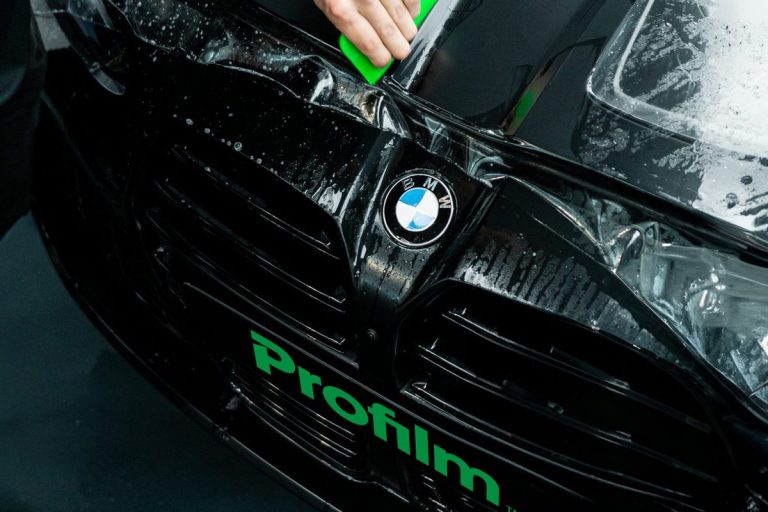
Finding the Right Installer
When you invest in protecting your vehicle’s paint with PPF, or in protecting yourself and your loved ones from the sun’s heat and UV rays with window film, you expect the product to perform.
You also expect the fitment to be carried out by skilled professionals who will deliver the highest level of craftsmanship.
Before choosing an installer, consider the signals that usually indicate professionalism and care:
-
They are recommended by people you trust or have strong independent reviews. The best indicator of quality is the satisfaction of past customers. Read online reviews, verify they are genuine, and ask friends and family for recommendations.
-
They use recognised products from a reputable manufacturer. Ask for the relevant credentials and check the manufacturer’s status.
-
They can explain the product, warranty, maintenance requirements, and expected finish clearly. They understand the product they’re fitting, and can make the perfect recommendation for your needs.
-
They have relevant training, certification, or brand support. PPF and window film installation require more than product knowledge. The work involves surface preparation, pattern judgement, adhesive handling, edge finishing, contamination control, curing judgement, and careful handover. Training and continuous improvement help installers deliver more consistent results.
-
Their workshop is clean, organised, and suitable for detailed film installation. Film installation is detailed work. Dust, contamination, poor lighting, rushed preparation, and unsuitable working conditions can all affect the finished result. A clean, organised, well-lit installation space is therefore a practical quality signal, not just an aesthetic one.
-
They are transparent about what is included, what is excluded, and how aftercare should be handled. They take pride in their work and provide clear information and relevant guidance.
-
Which product will be installed, and why is it appropriate for me and my vehicle?
-
Is the film backed by a manufacturer warranty?
-
Will I receive warranty and care documentation after installation?
-
How should I wash and maintain the film after installation?
-
What should I avoid during the initial curing period?
-
What happens if I notice a problem after installation?
How Profilm Supports Installers
Profilm invests in technical expertise, documentation, training, and support so that its installer network can continue improving workmanship and customer experience. Where possible, we encourage customers to work with trained professionals who understand both the product and the installation process.
Need help finding an installer? If you would like help finding a Profilm installer near you, get in touch and we will point you in the right direction.
ProCut Support
Installation Support
- Care & Maintenance
Protecting the Protection
- Recommended washing methods
- Pressure washing considerations
- Matte vs gloss care
- Stain management
- Warranty
Transparency You Can Trust
Profilm warranties are clearly documented and accessible. We believe clarity builds confidence – for installers and customers alike.
Each Profilm product has its own specific warranty duration of between 5 and 12 years. Please check the website, or your invoice for more details.
PPF is only warrantied on original painted surfaces that have fully cured, and a trained Profilm installer must have carried out the installation. The recommended care and maintenance must have been adhered to.
Claims for any products should be brought to the attention of the Manufacturer as soon as they become known to the Purchaser. Proof of purchase will be required by the authorised Installer to substantiate any
warranty claim.
- Technical Support
WHEN YOU
NEED AN ANSWER
If you can’t find what you’re looking for, our technical support team is here to help with product selection, installation guidance, and troubleshooting.
Need Something Specific?
If you’re looking for documentation, guidance, or support not listed here, get in touch and we’ll point you in the right direction.
FAQs: Clear Answers to Common Questions
We address the most frequent queries from vehicle owners and installers.
- Paint Protection Film benefits and limitations
- Installation expectations and timelines
- Partial vs full vehicle protection
- Self-healing technologies
- Aftercare, washing, and removal
Filter by Audience
Why should I put PPF onto my car?
PPF will protect your paintwork and will help you keep your car in pristine condition. Vehicles often lose value if they have been resprayed. PPF can prevent stone chips and costly resprays.
If I choose to have only part of the car fitted with PPF, will the colour look different when the film is removed?
No. Automotive paints have come a long way and fading with or without PPF will take place at the same rate.
Are there different types of Paint Protection Films? What are they?
Paint Protection Film comes in different qualities. Entry level PPF is constructed from TPH or vinyl and does not offer the longevity or finish of PPF constructed from TPU (thermoplastic polyurethane). All Profilm PPF is constructed using premium quality TPU.
Should I have the entire vehicle filmed with PPF or only part of it?
You can choose to have either partial protection or full car protection. If you opt for partial cover, it is recommended that all high wear areas are covered. This includes the front bumper, full bonnet, back of side mirrors, wings and sills.
What is Self-Healing PPF?
Most PPF products are self-healing. Self-healing means that small scratches on the film’s surface will heal by themselves over time. The topcoat is constructed in such a way that small scratches re-bond and level out. Note that the film will not self-heal if cut right through or if the urethane layer is badly damaged.
Should the vehicle be waxed prior to Profilm installation?
No. For optimal adhesion the painted surface should be free of waxes or oils. Waxing can take place after a Profilm application.
Can Profilm be applied to bodyshop-repaired paintwork?
Profilm is not warranted when applied to non OEM paint. Should your customer still elect to have Profilm installed, recommend waiting 30 days for the out-gassing process to take place.
Can the vehicle be driven immediately after Profilm is installed?
Ideally, the Installer should keep the vehicle overnight after a Profilm installation. A final check should then be undertaken for any edge-lifting before the vehicle is released to the owner.
Can Profilm be waxed?
Yes, a non-abrasive wax may be applied regularly as part of the maintenance schedule.
Can Profilm matte PPF be waxed?
Yes, waxes for matte finished vehicles are available on the market. These can be applied to Profilm Matte.
Can you put a coating on PPF?
A PPF-specific, flexible coating may be applied twice a year to maintain the durability of the PPF’s topcoat.
What if a stain does not disappear with normal washing?
Should a stain not disappear with normal cleaning, we recommend that you visit a professional detailer for a hand or low-pressure polish. Polishing removes surface contaminants and should be carried out every 18 months.
How do I remove Paint Protection Film from my car?
PPF should be removed by a professional. We recommend that you return your vehicle to a professional installer should you wish to have it removed.
How soon after installation can I clean my vehicle?
Ideally the vehicle should not be washed for 72 hours after installation. We do not recommend pressure-washing the vehicle in the 2 weeks following the installation. This gives the film sufficient time to bond to the vehicle surface, for any excess moisture to evaporate, and for PPF edges to fully adhere.
What is the IATF and what does the IATF 16949 standard mean?
Manufacturers dedicated to delivering value to the Automotive Industry will often demonstrate this with ISO (International Organization for Standardization) and other specialised certifications. One of these standards is IATF 16949:2016.
In the late 1990s the International Automotive Task Force (IATF) was created. This Task Force was composed of automotive OEMs and suppliers who were represented by their respective national automotive associations. The objective was to improve the overall quality of parts and components produced by suppliers to the OEMs, by developing a harmonised and consistent way to assess the quality and consistency of the products and services. By 2016, IATF 16949:2016 replaced the ISO/TS 16494 standard.
IATF 16949 is based on ISO 9001’s well established quality management standard, but integrates more stringent needs, together with strong customer-centred requirements for each automotive OEM. The ultimate goal is to consistently improve customer satisfaction.
The key elements being scrutinised under the IATF 16949:2016 certification are:
• Product Safety
• Quality Management Practice
• Defect Prevention
• Warranty Management
• Risk Management
• Waste Reduction
• Manufacturing Processes
• Efficiency and Effectiveness of Processes
• Supply Chain Management
• Continuous Improvement
By no way does IATF 16949 necessarily mean that a manufacturer is fully qualified and able to supply an automotive OEM. As one would expect, most OEMs have their own set of specific technical tests and customer service requirements.
What IATF 16949 does is provide a benchmark for consistent quality output, together with systems designed to continually reduce defects and ultimately improve the customer experience. And this is critical in an industry as dynamic as the automotive one.
IATF members include the following vehicle manufacturers: BMW Group, Ford Motor Company, Geely Holding Group, General Motors, IVECO Group, Jaguar Land Rover (JLR) Limited, Mercedes-Benz Group AG, Renault Group, Stellantis (ex FCA), Stellantis (ex PSA), Volkswagen AG, Volvo Group and their respective National Automotive Industry Associations – AIAG (U.S.), ANFIA (Italy), FIEV (France), SMMT (U.K.) and VDA (Germany).
Can I take my car through a pressure wash if it has PPF on it?
Pressure washers are not recommended. Excessive water pressure close to PPF edges may result in film lifting.
What is the IWFA, and what does it mean for PPF and Window Film professionals and consumers
“In the simplest terms it means commitment. IWFA members have pledged to present information about their products as accurately as possible and to not make performance claims that cannot be supported by independent research or some other valid type of support material.”
IWFA stands for International Window Film Association, a non profit trade association that represents the interests of those in the Window Film or PPF industry – manufacturers, distributors, installers and ultimately, consumers . It is represented in Europe by its local chapter, the European Window Film Association.
The IWFA advocates for its members and the industry as a whole, by providing research, influencing policies at local and national levels, and raising awareness and benefits of window films and PPF among consumers and the wider population.
“The International Window Film Association is the only non-profit organization specifically for the advancement and education ofWindow Films and PPF. The organization has served the industry over its 30+ year tenure as the most trusted source for information pertaining to Window Film and PPF.”
What does the logo mean?
There are various membership levels within the IWFA and EWFA.
Installer Member (US only): In the USA, installers can apply to become members of the IWFA. In doing so, they commit to the policies and guidelines of the Association.
Distributor Member: Distributors can apply to become members of the IWFA or EWFA. In doing so not only do they engage with the policies and guidelines, and demonstrate their commitment to their clients and customers. They also have a voice in shaping the industry’s future by attending the Association’s regular meetings.
Manufacturer Member: There are only 12 Manufacturer Members globally. There are many criteria that need to be fulfilled in order to be accepted in this very exclusive circle: consistent quality, minimum production volumes, quality management processes, and strict testing methods to produce accurate technical data sheets are all part of this. Manufacturer Members meet regularly to discuss issues affecting the industry, and work on solutions to further professionalise and improve the products and services offered to The entire value chain: OEM, distributors, car dealerships, installers, and ultimately consumers.
“IWFA window films manufacturers members extensively test their products to ascertain individual performance and ensure continued durability.
The IWFA promotes the production, specification and use of products which meet this level of performance and certification.”
Associate Members: The IWFA/EWFA comprise specialist organisations that have extensive technical, legal or scholarly knowledge to further advance the interest of the industry. Profilm Advanced Materials Ltd is proud to be a Member Manufacturer of the IWFA.
I've seen videos of knives being used to cut the film, should I worry about this?
Yes. New model cars all have patterns available. The film is cut on a plotter to the exact size of each panel. The film is then fitted to the vehicle panel-by-panel and knives are not used. There are not always patterns available for older model vehicles and a process called “bulking” is sometimes adopted. This involves covering a panel with a piece of PPF and then trimming the PPF on the vehicle. This is a highly specialised procedure. Be sure that you enquire as to the process to be followed on your vehicle’s installation.
Is PPF better than ceramic coating?
PPF is different to ceramic coating. PPF takes longer to apply but is easier to remove. It is best to take advice from a professional installer to fully understand the benefits of each product.
What's the difference between Paint Protection Film, Car Wrapping, and Ceramic Coating?
Car wrapping is a similar process to PPF but the product used differs. Car wrap is a vinyl construction and does not have the same protective qualities as PPF. Ceramic coating is a liquid application that hardens once applied to painted surfaces. Ceramic Coating does not have the same protective qualities as PPF.
How do I know the installer is a reputable one?
There are a few tell-tale signs of a professional installer. Expect the workshop area to be scrupulously tidy and dust-free. The fitment bay should be protected from the elements and should have good lighting. Also look out for training certificates that are usually issued by the PPF manufacturers after professional training has been carried out. Finally, ask to see a portfolio of work that has been recently carried out.
Is there an ideal time to get cars protected with PPF?
The ideal time to have a vehicle protected with PPF is before it is actually driven on the road. Many new car owners insist on PPF protection prior to taking their new vehicle onto the road. PPF can usually be arranged through your new car salesperson.
What are the differences between Instant-Healing and Self-Healing PPF?
Profilm (reGen) is Instant-Healing, meaning small scratches heal instantly without any heat. Self-Healing Profilm (Ultra Clear) requires a little heat from the sun, warm water or a hair dryer, in order to self-repair.
Should I have the entire vehicle filmed with PPF or only part of it?
You can choose to have either partial protection or full car protection. If you opt for partial cover, it is recommended that all high wear areas are covered. This includes the front bumper, full bonnet, back of side mirrors, wings and sills.